Renting a home does not mean living with blank walls and a space that never feels like yours. With a little creativity, a rental can feel warm, personal, and completely finished — and you can still get your full deposit back when you move out, by choosing projects that add color, texture, and personality without drilling holes or leaving a single mark behind.
Renter friendly DIY home decor is built on removable, reversible ideas: adhesive hooks instead of nails, peel-and-stick wallpaper instead of paint, leaning art instead of hung frames, and rugs layered over tired floors. This guide walks you through four projects that transform a rental room by room, all without a drill or a worried call to your landlord.
Before You Start: The Renter’s Golden Rules
Every good renter project starts with the lease: read it before you buy anything, because some leases allow small nail holes while others forbid any wall fixings, and a few specifically ban adhesives on certain surfaces. When in doubt, ask your landlord in writing.
Test every adhesive on a hidden spot first: press a hook or a strip of wallpaper onto a corner behind a door, leave it for a day, then remove it and check the paint. Most removable products come away cleanly, but old paint, textured walls, and fresh paint can behave differently.
Materials You Will Need
- Removable adhesive hooks and strips in a few sizes, rated for the weight you plan to hang
- Peel-and-stick wallpaper, one or two rolls for an accent wall or a smaller area
- A tension rod and lightweight curtain panels, plus clip rings if you like
- Frames and mirrors in a few sizes for leaning, with felt pads for the bottoms
- Two or three rugs in different textures for layering, plus a rug pad
- A freestanding shelf or leaning ladder shelf
- Table lamps, floor lamps, and warm-toned bulbs
- Throw pillows, a throw blanket, and a few plants in baskets or pots
- A plastic smoother or old credit card, a tape measure, a pencil, and a sturdy step stool
Project 1: A Peel-and-Stick Wallpaper Accent Wall
1. Pick your wall and measure it
Choose one wall to be the star — usually the wall behind the bed or the sofa. Measure its height and width, then order enough peel-and-stick wallpaper to cover it, with a little extra for matching the pattern. A bold botanical print, a soft stripe, or a textured grasscloth look all work beautifully.
2. Clean the wall and cut the first strip
Wipe the wall with a damp cloth and let it dry completely. Cut the first strip a few inches longer than the wall height, peel back the top few inches of backing, line it up with the ceiling edge, and press it into place with your smoother, working from the center outward to push out air bubbles.
3. Match the pattern and smooth as you go
Line up each new strip with the last, matching the pattern at the seam, and smooth it down a little at a time, peeling the backing as you go. Push small bubbles out toward the nearest edge with the smoother or a credit card, then trim the extra length at the top and bottom with a sharp craft knife.
Project 2: Tension-Rod Curtains and Leaning Art
1. Hang curtains without a single screw
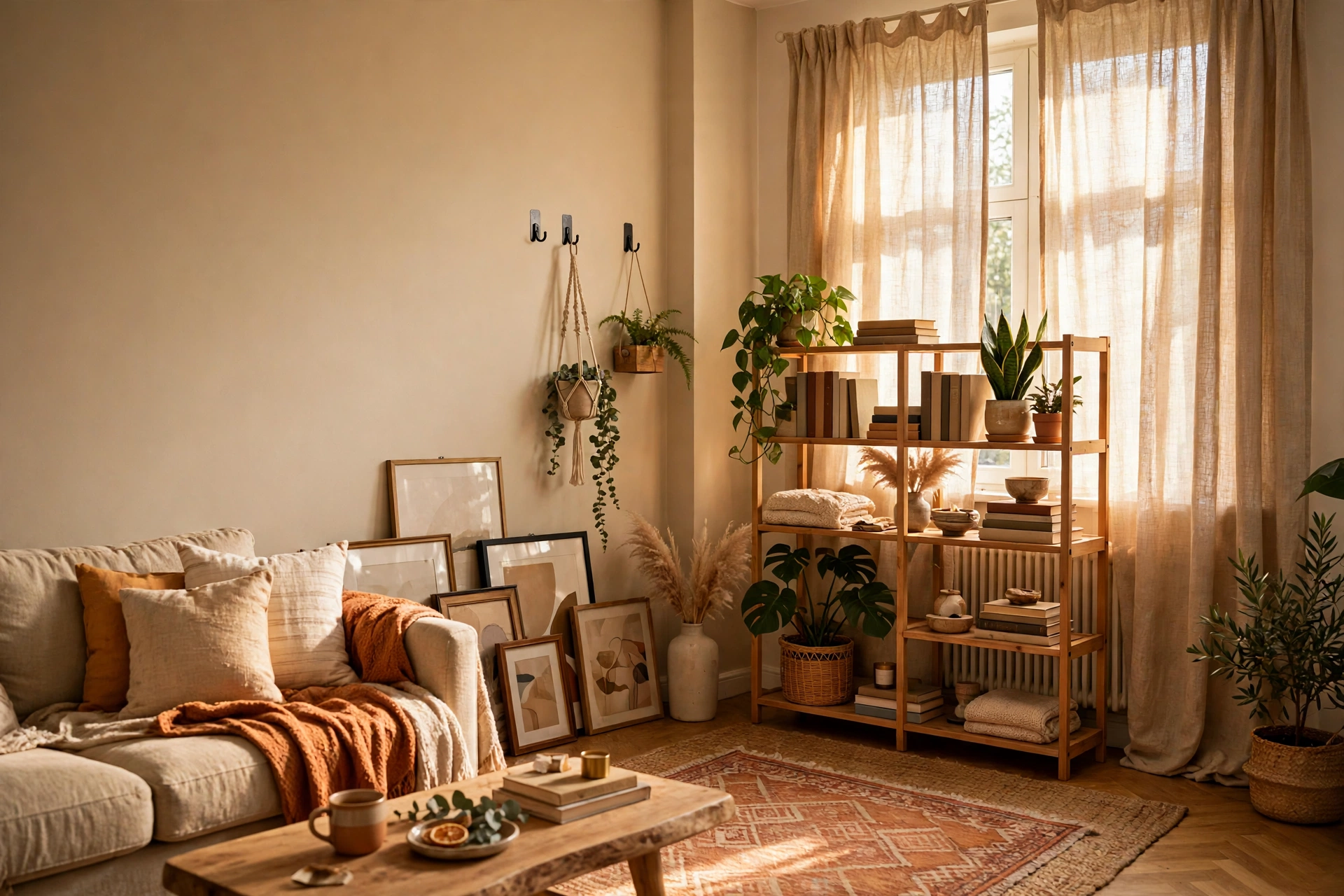
A tension rod fits inside a window frame or between two walls, held in place by pressure alone: twist it to extend until it grips firmly, then slide on lightweight curtain panels. Linen-look curtains in warm white soften harsh light and make a room feel taller, and you can swap them seasonally without touching the walls.
2. Lean large art and mirrors instead of hanging them
Big frames and mirrors look wonderful simply leaned against a wall: place a large mirror on the floor behind a console table, or lean a framed print on a dresser. Add felt pads to the bottom edge so the frame never scratches the wall or the floor, and angle the piece slightly so it sits securely.
3. Fill the gaps with adhesive hooks
Use removable adhesive hooks for the lighter pieces — small framed prints, a woven wall hanging, or warm fairy lights — following the weight rating on the packet, and wait an hour before hanging anything on a freshly pressed hook.
Project 3: Layered Rugs Over Tired Floors
1. Start with a large, simple base rug
If your rental floor is stained carpet or cold laminate, a large rug is the fastest fix: start with a big, flat-weave rug in a neutral tone that covers most of the floor. It instantly warms the room, hides whatever is underneath, and comes with you when you leave.
2. Layer a smaller rug on top
Layer a smaller, softer rug on top at a slight angle — a vintage-style rug over a jute base is a classic combination. The contrast in texture is what makes it work: flat jute underneath, plush wool or a soft pattern on top, with a rug pad between the layers so nothing slips.
3. Anchor the layers with furniture
Let the front legs of the sofa or the bed sit on the layered rugs to anchor them in place and stop them from creeping. Tuck the edges flat so nobody trips, and enjoy floors that feel like yours.
Project 4: Freestanding Shelves and Portable Light
1. Bring in a leaning ladder shelf
A leaning ladder shelf rests against the wall and needs no fixing at all. Use it for books, plants, and a few favorite objects, keeping the heaviest items on the lowest rungs — it folds flat for the moving van.
2. Style a freestanding shelf like a vignette
Arrange each shelf in small groups — a stack of books, a small plant, a candle, and one meaningful object — leaving breathing room between groups so the shelf looks styled rather than stuffed.
3. Finish with lamps you can carry
Lamps are the easiest way to make a rental feel like home: a floor lamp beside the sofa, a table lamp on the dresser, and warm-toned bulbs throughout turn harsh overhead light into a soft evening glow.
Safety Notes
Check your lease before you start, and never hang anything heavier than the weight rating on your adhesive hooks. Test adhesives on a hidden spot and wait a day before committing to a whole wall. Use a sturdy step stool for anything above shoulder height, and never stand on a chair or a stack of books. Keep heavy items low on freestanding shelves, and keep lamps away from curtains and bedding.
Frequently Asked Questions
Will peel-and-stick wallpaper damage the walls in my rental?
In most cases it will not, as long as the walls are smooth, clean, and fully cured. Test a small hidden spot first and leave it for a day before covering a whole wall, avoid freshly painted, textured, or peeling walls, and remove it slowly, pulling at a low angle, when you move out.
How do I hang things without drilling holes?
Removable adhesive hooks and strips are the simplest option, holding anything from a small frame to a curtain rod if you respect the weight rating. For heavier pieces, lean large art and mirrors against the wall, use freestanding shelves, or rest frames on furniture — and let tension rods handle the curtains.
What if my landlord says no to adhesive hooks?
Some leases do ban adhesives on certain surfaces, so check the lease and ask in writing if you are unsure. If hooks are out, lean into furniture-based decorating: leaning art, freestanding shelves, large mirrors, layered rugs, lamps, plants, and textiles — a room can be completely transformed without a single thing attached to a wall.
How do I make a small rental feel bigger?
Lean a large mirror against the wall to bounce light around the room, hang lightweight curtains high on a tension rod to lift the ceiling, and choose furniture with visible legs. Keep the palette light and consistent, and use layered rugs to define zones instead of crowding the room with small pieces.
Can I take all of this decor with me when I move?
That is the whole point of renter friendly decorating: peel-and-stick wallpaper peels off, adhesive hooks come away cleanly, tension rods twist out, leaning art lifts off the floor, layered rugs roll up, and freestanding shelves and lamps pack into the moving van. Invest in pieces you love — they will furnish your next home too.
A rental is not a waiting room — it is your home right now, and with removable, reversible projects, you can make it feel like yours from the first weekend to moving day.