Here’s a confession: for two years, our dining table was where the mail went to die. Bills, permission slips, a stray sock — it collected everything except dinner. We ate at the kitchen counter or on the couch, and the “dining room” was just the fanciest junk drawer in the house.
🍂 Hosting soon? Set the scene first with our 25 cozy fall living room decor ideas.
Then one Tuesday night, on a whim, I cleared it off, put down a cheap runner I’d been hoarding in the linen closet, and lit two candles. My husband raised an eyebrow. The kids sat down. And we had tacos — regular, messy, weeknight tacos — except this time we sat facing each other, and we talked. It took maybe ten minutes of effort, and dinner felt like an event instead of a refueling stop.
That’s what these ideas are about. Not a formal dining room you’ll be afraid to touch, but a dining space that invites you in on a random Tuesday. Whether you’ve got a grand farmhouse table or a hand-me-down four-top wedged into a corner, these 9 styling ideas will make it warm, welcoming, and — most importantly — used. Pin your favorites for your next dinner-party prep.
1. Choose a Table Runner Over a Full Cloth
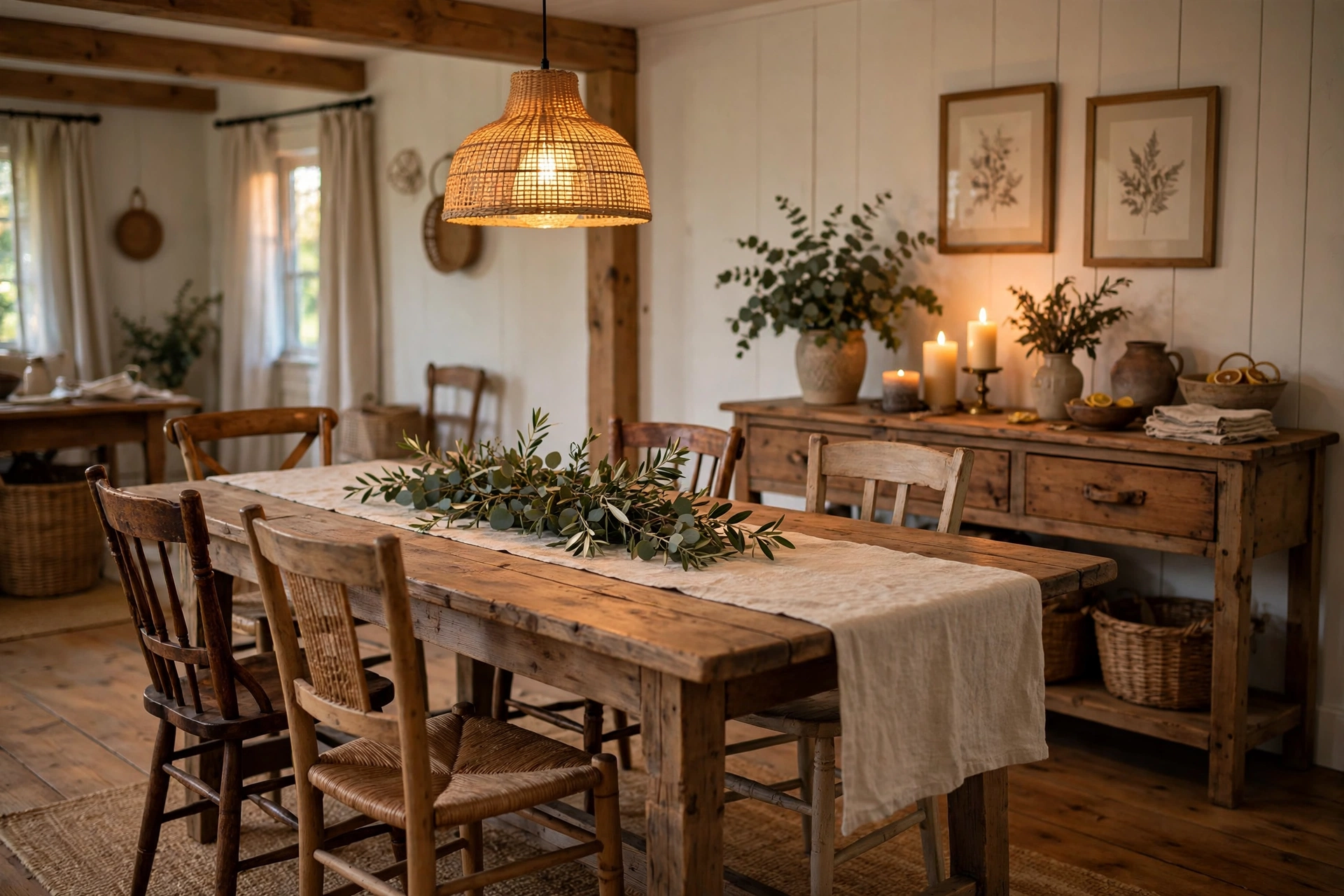
A full tablecloth hides your table; a runner shows it off while protecting the middle where the action happens. It’s the best of both worlds — you see the wood, but the serving dishes and hot pans land on fabric, not finish.
Why it works: A runner draws the eye down the length of the table, making the whole room feel longer and more pulled-together. It also signals “this table is in use,” which is half the battle.
Budget move: Linen-look runners run $15–$25 at Target, HomeGoods, or on Amazon. For a true zero-dollar option, fold a bedsheet or flat-weave throw into a runner strip — nobody will know. Styling tip: Let 8–12 inches hang over each end. A runner that stops short of the table’s edge looks like a place mat that got lost.
2. Keep Your Centerpiece Low
Nothing kills conversation like a towering floral arrangement you have to talk around. Your centerpiece should sit low enough that you can see the person across from you — roughly under 12 inches tall.
Why it works: Low centerpieces keep sightlines open, so the table feels social instead of staged. They’re also easier to move when you actually need to serve food — which is the whole point.
Budget move: Fill a wooden dough bowl with faux greenery or seasonal fruit ($15–$30 total), or cluster three pillar candles on a round tray. If you’re feeling crafty, pour your own — our step-by-step guide to making soy candles at home costs pennies per candle and they’ll look like a boutique find on your table. Styling tip: Odd numbers (3 or 5 items) almost always look better than even groupings.
3. Mix Your Chairs (On Purpose)
Matching chair sets can look a little stiff — like a showroom floor. Try different end chairs from the side chairs, or mix two styles that share one thing in common: seat height.
Why it works: Mixed seating looks collected over time rather than bought in a day. It’s the farmhouse way — nothing matches perfectly, and that’s exactly the charm.
Budget move: Keep your existing chairs and add just two different end chairs from a thrift store or local online marketplace ($20–$40 each). A coat of the same paint color on all of them ties everything together. Styling tip: Keep seat heights within an inch of each other, or guests will notice — and complain — every single meal.
4. Hang Lighting Low and Warm
If you have a pendant or chandelier, hang it 30–34 inches above the tabletop. Any higher and the light floats uselessly near the ceiling; any lower and tall guests will bonk their heads.
Why it works: Low, warm light (look for bulbs labeled 2700K, “warm white”) makes food look appetizing and faces look flattering. Harsh cool lighting makes even a great meal feel like a cafeteria.
Budget move: You don’t need a new fixture — just swap the bulbs to 2700K dimmables ($8–$12 for a 4-pack) and add a $15 plug-in dimmer if your switch isn’t dimmable. Styling tip: Turn the overhead light down to about 60% for dinner. Full blast is for cleaning up; dim is for lingering.
5. Give Serving Dishes a Landing Spot
A sideboard, buffet, or even a bar cart gives you somewhere to park serving dishes, drinks, and dessert — so the table itself stays uncluttered and conversational.
Why it works: When every dish has to squeeze onto the table, the table stops being a place to gather and becomes a storage unit. A landing spot keeps the flow going, buffet-style.
Budget move: A simple bar cart runs $40–$70, or repurpose a bookshelf or dresser you already own. Style it simply: a small plant, a stack of plates, one candle. Styling tip: Keep the top of the sideboard only two-thirds full. Breathing room reads as intentional; edge-to-edge reads as clutter.
6. Layer in Natural Texture
Woven placemats, a rattan tray, linen napkins, a jute rug under the table — natural textures are what make a dining room feel warm instead of cold and formal.
Why it works: Texture adds visual interest without adding color or pattern, so it’s nearly impossible to get wrong. It softens hard surfaces (wood, glass, tile) and makes the room feel touchable.
Budget move: A set of four woven placemats is about $12–$18, and a jute rug runner under a smaller table starts around $30. Thrift stores are goldmines for rattan trays — I’ve never paid more than $6 for one. Styling tip: Mix at least three textures (say, jute + linen + rattan) so it looks layered rather than matchy.
7. Create One Wall Moment
You don’t need a full gallery wall. One strong piece above the sideboard — a round mirror, an old window frame, a large art print — anchors the whole room.
Why it works: A dining room with bare walls feels unfinished, but covering every wall feels busy. One deliberate focal point gives the eye somewhere to land and makes the room feel designed.
Budget move: A large round mirror runs $30–$50 and bounces light beautifully. Or make your own statement piece — our DIY farmhouse wood sign tutorial walks you through a beginner-friendly project that looks made-for-the-room for under $20. Styling tip: Hang it so the center sits at eye level, about 57 inches from the floor — most people hang art too high.
8. Switch to Real Linens
Keep a basket of cloth napkins on the sideboard or on the table itself. They’re nicer than paper, better for the planet, and — here’s the part nobody tells you — about the same cost over a year if you buy a basic set.
Why it works: Cloth napkins make even takeout pizza feel a little special. They also soften the table visually and give you an easy way to add seasonal color — swap in rust napkins for fall, sage for spring.
Budget move: A set of 12 cotton napkins is $15–$20 and lasts for years. No need to iron them — a quick shake and fold looks perfectly casual. Styling tip: Roll them and stand them upright in a basket or crock for an easy grab-and-go setup.
9. Actually Use It Daily
This is the big one, and it costs nothing. Eat at your dining table on weeknights. Do homework there. Play cards there. A dining room that’s used daily stays warm and lived-in; one saved for holidays feels like a museum.
Why it works: Rooms we use get our attention — we notice when the runner needs washing or the candle burned down, and we fix it. Unused rooms just gather dust and guilt.
Budget move: Free. Start tonight. Styling tip: Keep the centerpiece simple enough that clearing the table takes 30 seconds. If styling the table feels like a chore, you’ll stop using the room — and we’re back to the mail pile.
Shop Smart: What This Actually Costs
You don’t need to do all nine at once. Here’s a realistic price map so you can pick your starting point:
Under $25: table runner ($15–$25), cloth napkins ($15–$20), 2700K bulbs ($8–$12), woven placemats ($12–$18)
$25–$50: dough bowl centerpiece ($15–$30), rattan tray (thrifted, $5–$10), round mirror ($30–$50), jute rug ($30+)
$50+: bar cart ($40–$70), pair of thrifted end chairs ($40–$80)
My honest advice? Start with lighting and the runner. Those two changes alone will make the biggest difference for the least money — and you’ll feel the payoff at the very next meal.
Common Mistakes to Avoid
1. The too-tall centerpiece. If guests have to lean sideways to talk, it’s too tall. When in doubt, go lower.
2. Hanging the light too high. Most dining pendants hang 40+ inches above the table because nobody adjusts the chain after installation. Drop it to 30–34 inches and thank me later.
3. Buying a matching everything. The table, chairs, sideboard, and hutch don’t all need to be the same wood tone. Two finishes are plenty; three is the max before it looks accidental.
4. Saving the room for “special occasions.” The fastest way to a dining room that feels cold is to never sit in it. Weeknight tacos count as a special occasion.
Frequently Asked Questions
How do I style a dining room on a really tight budget?
Start with what costs nothing: clear the table completely, then put back only what earns its place. Then spend your first $25 on a runner and warm bulbs — those two changes do the heaviest lifting. Thrift stores and local online marketplaces can cover chairs, trays, and mirrors for a fraction of retail.
What’s the best centerpiece for everyday use?
Something low, sturdy, and easy to move. A wooden tray with three candles, a dough bowl with greenery, or a simple bowl of seasonal fruit. Avoid anything fragile or tall — it’ll spend more time in a closet than on the table.
Can I mix wood tones in my dining room?
Absolutely — mixed woods are the heart of farmhouse style. The trick is to repeat each tone at least twice (for example, a dark table + dark frames, light chairs + light tray) so it looks deliberate rather than random.
How high should a chandelier hang above the table?
The bottom of the fixture should sit 30–34 inches above the tabletop for standard 8-foot ceilings. Add about 3 inches for every extra foot of ceiling height.
How do I make a small dining area feel bigger?
A round mirror on the wall bounces light and doubles the visual space, a light-colored rug defines the zone without closing it in, and keeping the table clear between meals prevents that cramped, cluttered feeling.
Save this post to your Pinterest dining room board — and tell me in the comments which idea you’re trying first. I want to hear about your Tuesday-night taco dinners.