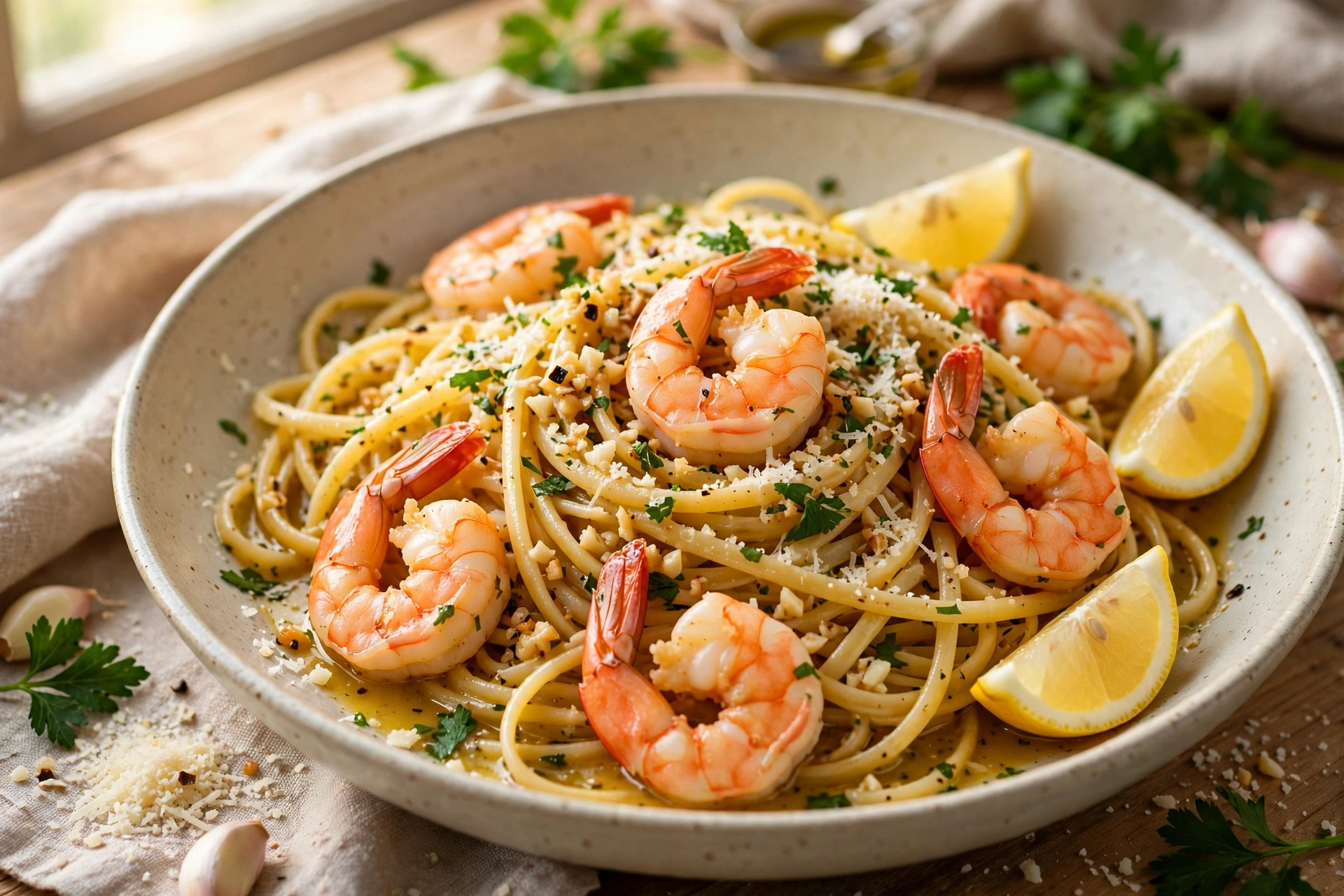
Some nights call for a dinner that feels a little luxurious but cooks like a weeknight meal. One-pot garlic butter shrimp pasta is that dinner. Plump shrimp, a buttery garlic sauce, and pasta that cooks right in the same pot, soaking up flavor as it goes. The whole thing is ready in thirty minutes, and there is only one pot to wash.
Cooking the pasta in the sauce instead of a separate pot of water is the trick that makes this dish work. As the pasta cooks, it releases starch into the liquid, and that starch turns butter, broth, and garlic into a silky sauce that clings to every strand. Nothing is drained away, so nothing is wasted.
This is the meal to make when shrimp is on sale, when guests are coming and you want to look like you tried harder than you did, or when you simply want a good dinner without a pile of dishes. A squeeze of lemon and a handful of parsley at the end keep it bright and fresh.
Why This Recipe Works
The order of cooking matters. The shrimp go in first, just long enough to turn pink, and then they come out. If shrimp stay in the pot for the whole cooking time, they turn rubbery and tough. Cooking them briefly and returning them at the end keeps them tender.
Garlic needs care too. It should cook just until fragrant, about a minute, before the liquid goes in. Garlic that browns turns bitter, and bitter garlic will haunt the whole pot. Medium heat and patience for that one minute are all it takes.
The pasta-to-liquid ratio is tested to work without constant babysitting. Stir every couple of minutes so the pasta does not stick together, and trust the timing. If the sauce looks thin at first, give it a minute; the starch thickens it as it rests.
What You Need
Use large shrimp, peeled and deveined, with tails on or off according to your preference. Tails on look nicer for serving, but tails off are easier to eat. Frozen shrimp work perfectly well; thaw them in cold water for 15 minutes and pat them dry before cooking.
For the pasta, linguine or spaghetti both work, broken in half if needed to fit the pot. A wide, deep skillet or a Dutch oven gives the pasta room to cook evenly. Use low-sodium broth so you can control the salt, since the butter and Parmesan already bring plenty.
How to Make It
Melt half the butter in a large, deep skillet over medium-high heat. Add the shrimp in a single layer, season with salt and pepper, and cook about 2 minutes per side until just pink. Remove the shrimp to a plate; they will finish cooking later.
Reduce the heat to medium and melt the remaining butter. Cook the garlic for 1 minute until fragrant, then add the red pepper flakes if using. Pour in the broth and water, scraping up any browned bits, and bring to a boil.
Add the pasta, pushing it down into the liquid as it softens. Reduce to a simmer and cook, stirring often, until the pasta is al dente and most of the liquid has been absorbed, about 10 to 12 minutes. Stir in the Parmesan, lemon juice, and parsley, then return the shrimp to the pot and toss gently until warmed through. Serve immediately with extra Parmesan and lemon wedges.
Recipe Card
- Prep time: 10 minutes
- Cook time: 20 minutes
- Total time: 30 minutes
- Servings: 4
- Course: Main Course
- Cuisine: American
- Keyword: One-Pot Garlic Butter Shrimp Pasta
Ingredients
- 1 pound large shrimp, peeled and deveined
- 4 tablespoons unsalted butter, divided
- 5 cloves garlic, minced
- 1/4 teaspoon red pepper flakes (optional)
- 2 cups low-sodium chicken or vegetable broth
- 2 cups water
- 12 ounces linguine or spaghetti
- 1/2 teaspoon salt
- 1/2 teaspoon black pepper
- 1/2 cup grated Parmesan cheese, plus more for serving
- 2 tablespoons lemon juice
- 1/4 cup chopped fresh parsley
- Lemon wedges, for serving
Instructions
- Pat the shrimp dry and season with salt and pepper.
- Melt 2 tablespoons butter in a large, deep skillet over medium-high heat. Cook the shrimp 2 minutes per side until just pink. Remove to a plate.
- Reduce the heat to medium. Melt the remaining 2 tablespoons butter and cook the garlic for 1 minute until fragrant.
- Stir in the red pepper flakes if using. Pour in the broth and water, scraping up the browned bits, and bring to a boil.
- Add the pasta, pushing it into the liquid as it softens. Reduce to a simmer.
- Cook 10 to 12 minutes, stirring often, until the pasta is al dente and most of the liquid is absorbed.
- Stir in the Parmesan, lemon juice, and parsley.
- Return the shrimp to the pot and toss gently until warmed through.
- Serve immediately with extra Parmesan and lemon wedges.
Tips for the Best Result
Pat the shrimp dry before cooking. Wet shrimp steam instead of searing, and you will miss the light browning that adds flavor. Paper towels do the job in seconds.
Stir the pasta often, especially in the first few minutes. Pasta cooked in a small amount of liquid wants to clump, and a quick stir every couple of minutes keeps the strands separate and the cooking even.
Do not overcook the shrimp. They continue cooking from residual heat after they leave the pan and again when they return to the pot. Pull them when they are just pink and slightly translucent in the center; they will finish perfectly in the final toss.
Variations
Add a handful of cherry tomatoes with the garlic for a burst of sweetness, or a few cups of baby spinach at the end for color and freshness. For a creamier version, stir in a quarter cup of heavy cream with the Parmesan.
Swap the linguine for penne or fettuccine if that is what you have; just adjust the cooking time by a minute or two and watch the liquid level. A splash of white wine in place of half a cup of the broth adds depth for a dinner-party version, but let it simmer for a minute before adding the pasta.
Make-Ahead and Storage
This dish is best served fresh, since shrimp and pasta both lose texture when stored. If you must plan ahead, you can prep everything in advance: peel the shrimp, mince the garlic, grate the Parmesan, and measure the liquids, so the actual cooking takes only twenty minutes.
Leftovers keep in the refrigerator for up to 2 days in an airtight container. Reheat gently on the stove with a splash of broth or water to loosen the sauce, and warm just until heated through so the shrimp do not toughen.
Frequently Asked Questions
Can I use frozen shrimp?
Yes. Thaw them in a bowl of cold water for about 15 minutes, then drain and pat very dry. Do not thaw shrimp in warm water or the microwave, which can start cooking them unevenly.
What if my pasta absorbs all the liquid too early?
Add a splash of hot water or broth, a quarter cup at a time, and stir. Different pasta brands absorb liquid at different rates, so keep a little extra broth nearby and adjust as you go.
Can I make this dairy-free?
Use olive oil or a plant-based butter in place of the butter, and skip the Parmesan or use a dairy-free alternative. The sauce will be lighter but still flavorful thanks to the garlic and lemon.
How do I know when the shrimp are done?
Shrimp are done when they curl into a loose C shape and turn pink and opaque. A tight O shape means they are overcooked. When in doubt, pull them a minute early; residual heat finishes the job.
Can I add vegetables to this pasta?
Yes. Cherry tomatoes, spinach, asparagus pieces, or peas all work well. Add firmer vegetables with the pasta and tender ones like spinach in the last minute of cooking.
Is one-pot pasta really as good as the traditional method?
For this dish, yes. Cooking the pasta in the sauce builds flavor and body that a drained pot of pasta cannot match, and the starch gives you a silky sauce without any cream or flour.
One-pot garlic butter shrimp pasta is proof that a fast dinner does not have to be a boring one. Keep shrimp in the freezer and pasta in the pantry, and you are always thirty minutes from a meal that feels like a treat.