
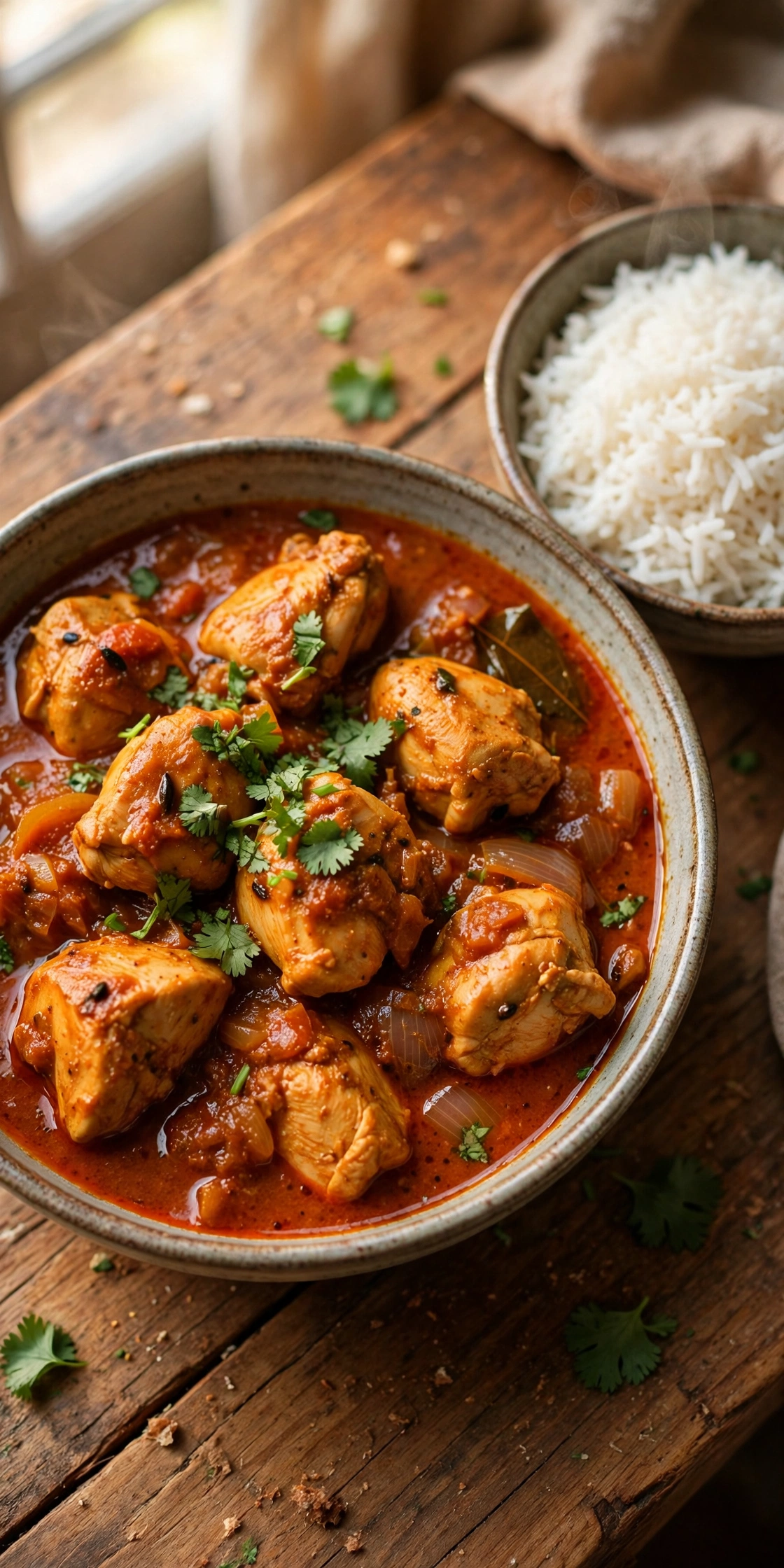
Some weeknights call for a dinner that feels like real cooking without turning the evening into a project. This easy chicken curry is that kind of recipe. Tender chicken simmers in a tomato and onion sauce seasoned with garam masala, ginger, and garlic until the flavors come together into something warm, savory, and just a little bit tangy. It is the sort of meal that makes a regular Tuesday feel cared for, and it comes together in one pan in about forty minutes.
If you are new to curry at home, this is a good place to start. Brown the chicken, soften the onions, bloom the spices, and let the tomatoes do the work. The sauce thickens as it simmers, and yogurt or cream at the end rounds it out. Serve with rice, warm naan, or both.
Why This Recipe Works
Simple pantry spices, big flavor
Garam masala does a lot of the heavy lifting here. It is a warm blend, usually built around cinnamon, cardamom, cloves, cumin, and coriander, and it gives the sauce its familiar curry-house depth without requiring a dozen separate jars. Cumin and coriander add earthiness, turmeric adds color, and a pinch of chili brings gentle heat that you can adjust to your taste.
One pan, weeknight timing
Everything happens in a single large skillet or Dutch oven. That means less washing up and a sauce that builds flavor in layers: first the browned chicken, then the softened onions, then the spices toasted in oil, then the tomatoes simmered down into a proper sauce. The total time is forty minutes, with fifteen minutes of prep and twenty-five minutes of cooking.
Ingredients
- 1 1/2 pounds boneless, skinless chicken thighs, cut into 1-inch pieces
- 1 teaspoon kosher salt, divided
- 1/2 teaspoon black pepper
- 2 tablespoons neutral oil, such as avocado or vegetable oil
- 1 large yellow onion, finely diced
- 4 cloves garlic, minced
- 1 tablespoon fresh ginger, grated
- 1 tablespoon garam masala
- 1 teaspoon ground cumin
- 1 teaspoon ground coriander
- 1/2 teaspoon ground turmeric
- 1/4 teaspoon red chili flakes, plus more to taste
- 1 can (14 ounces) crushed tomatoes
- 1/2 cup low-sodium chicken broth
- 1 tablespoon tomato paste
- 1 teaspoon sugar
- 1/2 cup plain whole-milk yogurt or heavy cream
- 1/4 cup fresh cilantro leaves, chopped
- Cooked basmati rice, for serving
- Warm naan, for serving (optional)
How to Make Easy Chicken Curry
Step 1: Season and brown the chicken
Pat the chicken dry with paper towels and season it with half a teaspoon of salt and the black pepper. Heat the oil in a large skillet or Dutch oven over medium-high heat. Add the chicken in a single layer and cook for about four minutes per side, until lightly browned. The chicken does not need to be cooked through at this stage; it will finish in the sauce. Transfer it to a plate and set it aside.
Step 2: Soften the onion
Reduce the heat to medium and add the diced onion to the same pan, along with a pinch of salt. Cook for five to six minutes, stirring often, until the onion is soft and golden at the edges. Scrape up any browned bits from the bottom of the pan as you stir; those bits add a lot of flavor to the sauce.
Step 3: Add garlic, ginger, and spices
Stir in the garlic and ginger and cook for one minute, until fragrant. Add the garam masala, cumin, coriander, turmeric, and red chili flakes. Stir constantly for about thirty seconds so the spices toast in the oil without burning. This short step, called blooming, wakes up the spices and deepens the flavor of the finished curry.
Step 4: Build the tomato sauce
Stir in the tomato paste and cook for one minute. Pour in the crushed tomatoes and chicken broth, then add the sugar and the remaining half teaspoon of salt. Stir well, scraping the bottom of the pan, and bring the sauce to a gentle simmer.
Step 5: Simmer the chicken in the sauce
Return the chicken and any juices from the plate to the pan. Reduce the heat to medium-low, cover partially, and simmer for fifteen minutes, stirring occasionally. The sauce should thicken slightly and the chicken should be cooked through and tender.
Step 6: Finish with yogurt or cream
Remove the pan from the heat and let it cool for two minutes. Stir in the yogurt or cream a spoonful at a time until the sauce turns smooth and slightly lighter in color. Adding it off the heat helps keep yogurt from splitting. Taste and adjust the salt and chili to your liking.
Step 7: Serve
Spoon the curry over cooked basmati rice, sprinkle with chopped cilantro, and serve with warm naan if you like. A simple cucumber salad or a handful of sliced cucumbers on the side adds a cool crunch that works well with the warm spices.
Tips for the Best Chicken Curry
Use chicken thighs if you can. They stay juicy through simmering and are more forgiving than breasts, which can dry out if cooked even a little too long. If you prefer breasts, cut them evenly and check them a few minutes early.
Take your time with the onion. A fully softened, lightly golden onion gives the sauce sweetness and body. Five to six minutes is enough, but do not skip this step.
Keep the heat moderate when you add the spices. Thirty seconds in hot oil is plenty. If the spices darken too fast, pull the pan off the heat before adding the tomatoes.
Taste at the end. Tomatoes vary in acidity, so the sugar and final seasoning bring the sauce into balance. A squeeze of lemon at the table can also brighten the dish.
Variations
For a milder curry, leave out the red chili flakes and use cream instead of yogurt. The sauce will be rich and gentle, which works well for younger eaters.
For a heartier version, add a can of drained chickpeas along with the tomatoes, or stir in a couple of handfuls of baby spinach during the last five minutes of simmering until wilted.
For extra heat, add a finely diced serrano or jalapeno with the onion, or increase the red chili flakes to half a teaspoon. Serve with extra yogurt on the side so everyone can cool their own bowl.
For a dairy-free version, use full-fat coconut milk instead of yogurt or cream. The sauce will be a little richer and lightly sweet.
Make Ahead and Storage
This curry tastes even better the next day, once the spices have had time to settle into the sauce. Let it cool completely, then store it in an airtight container in the refrigerator for up to four days. Reheat gently over medium-low heat, stirring often, and add a splash of water or broth if the sauce has thickened too much.
For longer storage, freeze the curry without the yogurt or cream for up to three months. Thaw it overnight in the refrigerator, reheat it gently, and stir in the yogurt or cream just before serving. Cook rice fresh when you are ready to eat, since reheated rice dries out faster than the curry itself.
What to Serve With Chicken Curry
Basmati rice is the classic partner, and its light grains soak up the sauce without turning heavy. Naan is perfect for scooping, especially warmed in a dry skillet. Sliced cucumber with salt and lemon, or a small green salad, keeps the plate fresh.
Frequently Asked Questions
Can I use chicken breasts instead of thighs?
Yes. Cut boneless, skinless chicken breasts into even one-inch pieces and simmer them for twelve to fifteen minutes, checking early so they do not overcook. Thighs are more forgiving, but breasts work well if you watch the timing.
Is this chicken curry spicy?
It is mildly spiced as written. The quarter teaspoon of red chili flakes adds warmth rather than real heat. Leave the flakes out for a mild version, or add more, or a fresh chili, if you like it hotter.
Can I make this curry ahead of time?
Yes, and it reheats beautifully. Refrigerate up to four days, or freeze up to three months without the yogurt or cream, then stir it in after reheating.
What if my sauce is too thin?
Let it simmer uncovered for a few extra minutes, stirring often, until it reaches the consistency you like. If it is too thick, stir in a splash of chicken broth or water. The sauce will also thicken slightly as it cools.
Can I use fresh tomatoes instead of canned?
Yes. Use about one and a half pounds of ripe tomatoes, chopped, instead of canned. Simmer five extra minutes so they break down, and add a little extra salt and sugar to balance acidity.