I’ll be honest: our bedroom was the last room in the house to get any attention. The living room got the nice rug, the kitchen got the open shelves, and the bedroom got… a mattress on a frame and a laundry chair. You know the chair. The one that isn’t for sitting.
🍂 Doing the living room next? Do not miss our gallery of 25 cozy fall living room decor ideas.
Then I spent one night at a friend’s farmhouse — a bedroom with layered white bedding, a pine headboard, linen curtains moving in the breeze — and I slept better than I had in months. It wasn’t fancy. It was calm. Every surface was soft, everything had a place, and nothing was asking for my attention. I came home and decided our bedroom deserved the same peace.
Farmhouse style is perfect for bedrooms because it’s built on the things rest needs: warm wood, soft natural fabrics, unhurried charm, nothing shouting. These 12 ideas will turn your bedroom into the calmest room in your home — whether you’re starting from a laundry chair or just refreshing. Save your favorites to your Bedroom Pinterest board.
1. Layer Your Bedding in Whites and Creams
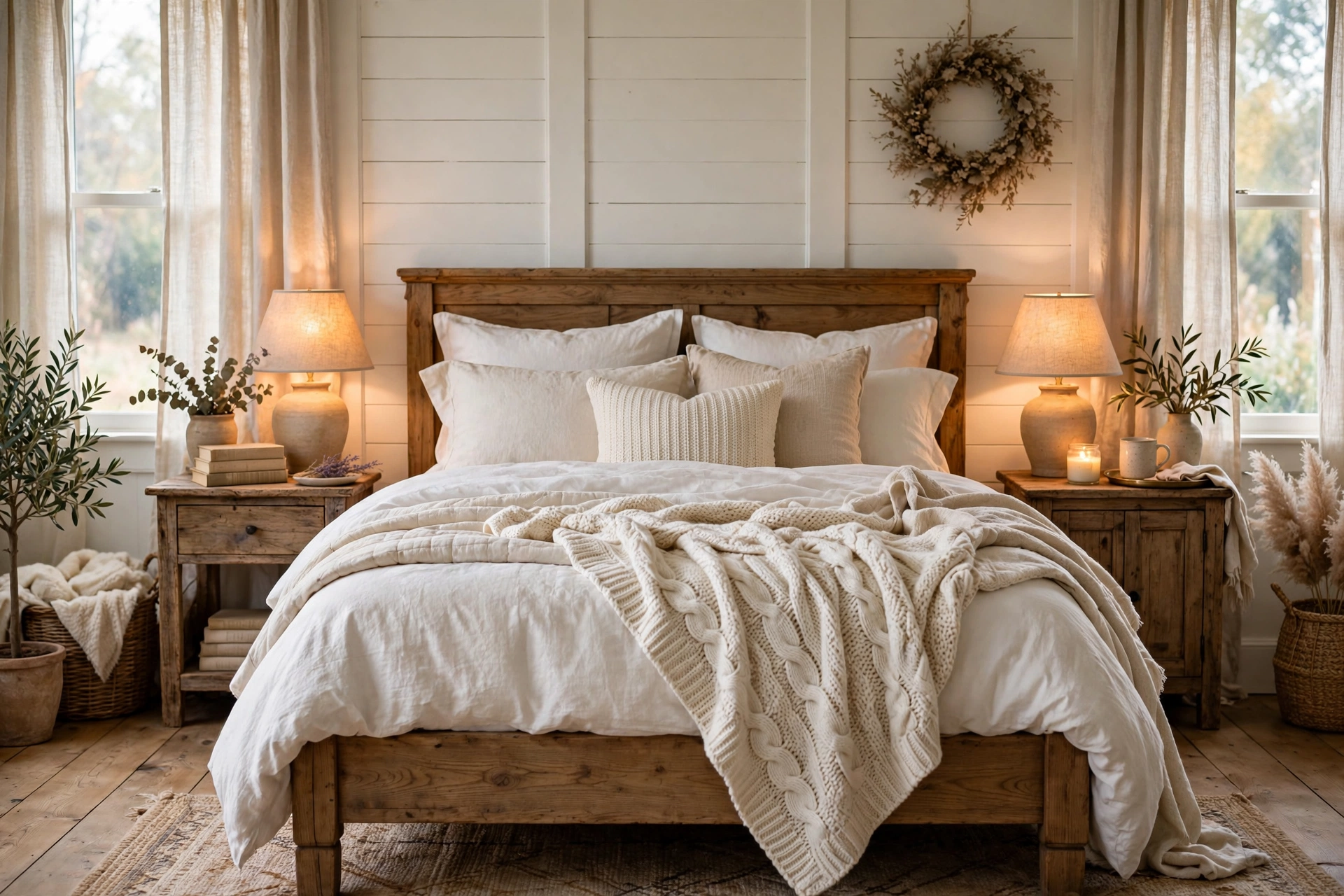
Start with white or cream sheets, add a coverlet or duvet in a soft neutral, then top with a chunky knit or quilted throw in a slightly deeper tone — oatmeal, soft taupe, warm gray. Mix the fabrics: linen, cotton, knit.
Why it works: Layered bedding in a tight neutral palette looks rich and inviting without any pattern-matching stress. The mixed textures (smooth linen + nubby knit) create depth that flat, matchy bedding sets can’t.
Budget move: You don’t need a whole new bedding set — add one textured throw ($30–$50) and two Euro shams ($15–$25 each) to what you own. Styling tip: Fold the top of the duvet back about a third of the way and drape the throw across the foot at a slight angle. That “just slept in, but make it pretty” look is intentional, I promise.
2. Anchor the Room With a Wooden Bed Frame
A simple pine or oak bed frame — even just a headboard — grounds the whole room in farmhouse warmth. You don’t need ornate; clean lines and visible wood grain do the work.
Why it works: Wood brings natural warmth that upholstered frames can’t match, and it ages beautifully. A wooden frame also visually anchors the bed as the room’s centerpiece instead of letting it float.
Budget move: A simple pine headboard runs about $60 unfinished — lightly sand it and rub in some furniture wax for a custom look. Check your local online marketplace listings for solid wood frames; they’re always there. Styling tip: If your frame is dark wood, keep bedding light for contrast. Light wood + white bedding is the classic farmhouse combination that never misses.
3. Put a Bench (or Vintage Suitcases) at the Foot of the Bed
A wooden bench gives you a spot to sit while putting on shoes, a place to drape tomorrow’s clothes, and a surface for a folded quilt. No bench? A stack of two vintage suitcases does the same job with more personality.
Why it works: It finishes the bed visually — without something at the foot, the bed can look like it ends abruptly. It’s also genuinely useful in a way most decor isn’t.
Budget move: A simple pine bench is $50–$80; vintage suitcases run $10–$20 each at flea markets. Drape a quilt you already own over either one. Styling tip: Keep the top mostly clear — one folded quilt or throw, not a pile. This is a landing spot, not storage.
4. Hang Linen Curtains High and Wide
Airy linen or linen-look panels in white or flax, hung 4–6 inches above the window frame and 3–4 inches wider on each side. Let them just kiss the floor.
Why it works: Hanging high and wide makes windows — and the whole room — feel bigger and taller. Linen filters light softly instead of blocking it, so mornings feel gentle rather than glaring.
Budget move: Linen-look panels run $20–$30 per pair. Styling tip: If streetlights or early sun bother you, layer inexpensive blackout roller shades ($15–$25 per window) behind the linen panels. Pretty by day, dark by night.
5. Keep Lighting Warm and Low
Bedside lamps with fabric shades, 2700K warm-white bulbs, and ideally a dimmer or a low-wattage bulb. Overhead lights should be the last resort in a bedroom, not the default.
Why it works: Warm, low light tells your brain it’s evening — it genuinely helps you wind down. Harsh overhead lighting in a bedroom feels like an interrogation room; nobody rests well under it.
Budget move: Two matching table lamps run $25–$40 each; warm bulbs are $8–$12 for a 4-pack. Styling tip: Put bedside lamps on a timer or smart plug so they click off after you’ve fallen asleep. One less thing to remember at midnight.
6. Add One Vintage Find With Soul
A chippy-painted nightstand, an old mirror with a worn frame, a wooden crate as a side table — one genuinely old piece gives the whole room a sense of history that new furniture can’t fake.
Why it works: Perfect rooms feel like showrooms. One imperfect, storied piece makes everything else feel collected and personal. It’s the difference between “decorated” and “lived in.”
Budget move: Flea markets, estate sales, and thrift stores — $10–$30 for a small piece. Don’t refinish it to perfection; the wear is the point. Styling tip: Just one or two vintage pieces. A room full of chippy furniture tips from “charming” into “shabby” fast.
7. Style Simple, Calm Nightstands
Each nightstand gets four things max: a lamp, a small stack of books or one book, a carafe or glass of water, and one personal item (a photo, a small plant) on a wooden tray.
Why it works: Nightstands collect chaos — chargers, receipts, half-read mail. A tray creates a boundary: what fits on the tray stays, the rest finds another home. You’ll sleep better looking at calm instead of clutter.
Budget move: A small wooden tray is $8–$12. Styling tip: Hide the charger cord. Run it behind the nightstand and use a short cable. Visible cord spaghetti ruins the calm faster than anything.
8. Layer Rugs for Softness
A large jute or natural-fiber rug under the bed (extending 18–24 inches on each side) with a smaller, softer rug layered on top where your feet land in the morning.
Why it works: The jute layer adds texture and grounds the bed; the soft top layer is what your bare feet actually feel at 6 a.m. Two rugs also let you get the large-scale look for less than one huge plush rug.
Budget move: A jute rug big enough to go under a queen bed runs $80–$120; a soft 2×3 top layer is $20–$30. Styling tip: The bed’s front legs should sit on the rug. A rug that stops short of the bed looks like it’s floating away.
9. Bring in Greenery
A sprig of eucalyptus in a stoneware pitcher, a trailing pothos on the dresser, a small olive tree in the corner — one or two plants soften all the rectangles in a bedroom.
Why it works: Bedrooms are full of hard lines: bed frame, dresser, nightstands, door frames. Something living and organic breaks up all that geometry and makes the room feel fresh.
Budget move: A eucalyptus bunch is $8–$12 and dries beautifully (it lasts months). A pothos is about $10 and nearly impossible to kill. Styling tip: Keep bedroom plants simple and low-maintenance. This is a rest room, not a greenhouse — one or two is plenty.
10. Hang a Small Gallery Wall
Four to six framed prints in matching wood frames, hung in a simple grid or a relaxed cluster above the dresser or on the wall opposite the bed.
Why it works: Matching frames make any collection of art look intentional — family photos, botanical prints, a favorite quote. It’s the frames doing the work, not the art.
Budget move: Matching wood frames run $5–$8 each at IKEA, Target, or thrift stores. Print photos at home or use free printable art. Styling tip: Lay the arrangement on the floor first and photograph it. What looks good on the floor usually looks good on the wall — and it’s much easier to rearrange.
11. Use Baskets for Beautiful Storage
Woven baskets for extra blankets, a lidded basket for the “chair clothes” (we all have them), a small basket on the dresser for odds and ends. Storage that looks like decor.
Why it works: Bedrooms need real storage — extra bedding, off-season clothes, the stuff that migrates. Baskets hide it all while adding the natural texture farmhouse style loves.
Budget move: Baskets run $10–$25 depending on size; thrift stores always have them. Styling tip: Lidded baskets for things you don’t want to see (chargers, clutter); open baskets for things that look good (rolled blankets, throw pillows).
12. Make Your Own Pillows
Here’s my favorite budget secret for a farmhouse bedroom: handmade pillow covers. A few yards of drop cloth, linen, or thrifted fabric become custom Euro shams and lumbar pillows for a fraction of store prices — no sewing machine required.
Why it works: Pillows are where bedding gets its personality, and custom covers in exactly your fabric and size look designer-made. Drop cloth has that perfect nubby farmhouse texture for about $3 a yard.
Budget move: Our no-sew pillow cover tutorial walks you through the whole thing — covers for under $5 each versus $25–$40 in stores. Styling tip: Mix sizes: two Euro shams against the headboard, two sleeping pillows in front, one lumbar pillow across the front. Odd numbers, varying sizes, all in the same color family.
Shop Smart: What This Actually Costs
A full farmhouse bedroom refresh, honestly priced:
Under $25: eucalyptus bunch ($8–$12), wooden tray ($8–$12), pothos ($10), DIY pillow covers (under $5 each), matching frames ($5–$8 each)
$25–$75: linen curtain panels ($20–$30 per pair), bedside lamps ($25–$40 each), textured throw ($30–$50), pine bench ($50–$80), vintage nightstand ($10–$30 thrifted)
$75+: jute rug ($80–$120), pine headboard ($60+)
My honest starting order: bedding layers first (you’ll feel it every night), then lighting, then curtains. Those three change how the room feels more than anything else — and you can do all three for under $150. If you want a personal touch above the bed, our DIY farmhouse wood sign tutorial makes a perfect beginner project for under $20.
Common Mistakes to Avoid
1. Buying a matching bedroom set. The headboard-dresser-nightstand set in one finish looks like a furniture store display. Mix wood tones and add one vintage piece — collected beats matched every time.
2. Using cool-white bulbs. Anything above 3000K in a bedroom feels clinical. Stick to 2700K warm white everywhere — it’s the single cheapest mood upgrade.
3. Skipping the rug because of budget. Bare floors make a bedroom feel cold and echoey no matter how pretty the bedding is. Even one affordable jute rug changes the whole feel of the room.
4. Decorating the bedroom last and never. (Guilty.) Your bedroom is where you start and end every day — it deserves attention first, not last. Even one weekend of effort pays off every single night.
Frequently Asked Questions
What colors work best for a farmhouse bedroom?
Warm whites, creams, soft taupes, sage green, and warm gray — with natural wood tones doing the heavy lifting. Keep the palette tight (3–4 colors max) and let texture provide the interest instead of bold color.
How can I make my bedroom cozy on a small budget?
Start with bedding: one textured throw and DIY pillow covers change the bed completely for under $50. Then swap to warm bulbs ($10) and add linen-look curtains ($25). Those three moves deliver 80% of the cozy for about $85.
What should I put above my bed?
One statement piece: a large piece of art, a handmade wood sign, a wreath, or a pair of matching frames. Keep it simple — above the bed is not the place for a busy gallery wall. Center it over the headboard, about 6–8 inches above it.
How do I keep my nightstand from getting cluttered?
The tray rule: everything on the nightstand must fit on one small tray. Lamp beside the tray, not on it. When the tray is full, something has to leave before anything new arrives. It sounds strict, but it works.
Can farmhouse style work in a small bedroom?
Absolutely — farmhouse style actually suits small rooms because it’s built on simplicity. Keep the palette light, hang curtains high and wide, use one vintage piece instead of five, and let the bed be the star. Less furniture, more calm.
Save this to your Cozy Bedroom board on Pinterest, and start with the bedding — tonight’s sleep is too important to wait for a full makeover.