There is a small, daily frustration that most of us know well: standing in front of a crowded pantry, moving three cans to reach the one you want, and finding a bag of pasta you bought twice because you could not see the first one. A pantry does not need to be big to work well. It needs a system — a place for everything, and everything visible.
These pantry organization ideas are simple, practical, and kind to your budget. Just a good clear-out, a few bins and labels, and zones that match the way you actually cook. Set aside a relaxed afternoon and enjoy the satisfaction of a pantry where you can see everything at a glance.
Why Pantry Organization Works
A pantry works when you can see what you have. Most pantry chaos comes from depth: things get pushed to the back, forgotten, and bought again. Clear bins, labels, and grouping by use solve that problem without any special equipment. When everything has a visible home, putting groceries away takes seconds instead of minutes, and cooking starts with a quick look instead of a hunt.
The second reason organization works is that it saves money. When you can see the rice, the beans, and the baking supplies, you stop buying duplicates. A tidy pantry quietly pays for itself, week after week.
Materials You Will Need
- Clear stackable bins or baskets, in two or three sizes
- Clear airtight canisters or jars for flour, sugar, rice, and pasta
- A lazy Susan turntable for oils, sauces, and condiments
- Small bins or a tiered shelf riser for canned goods
- A label maker, or chalk labels and a marker
- A step stool for reaching high shelves
- Trash bags and a box for donations
- A notebook or phone for your pantry inventory list
- Optional: shelf liner, hooks for the inside of the door, and a small basket for snacks
Step-by-Step: Organizing Your Pantry
1. Empty the pantry completely
Take everything out of the pantry, shelf by shelf, and set it on the kitchen table or counter. Yes, everything — even the things you are sure belong. An empty pantry lets you see the space clearly, wipe the shelves, and notice what is actually hiding in the back corners. Wipe every shelf with a damp cloth and let them dry while you sort.
2. Sort, check dates, and let go
Sort everything into groups on the table: baking, breakfast, canned goods, grains and pasta, snacks, oils and sauces, spices, and drinks. As you sort, check the date on every item. Toss anything expired or stale, and set aside unopened food you will not use for donation.
3. Plan zones by how you cook
Plan the pantry in zones that match your cooking. Breakfast foods together, baking supplies together, canned goods together, snacks together. Put the things you reach for every day — coffee, cereal, cooking oil — at eye level and within easy reach. Put heavy items like big bags of flour and rice on low shelves, where they are stable and easy to lift. Put rarely used items, like the holiday baking supplies, up high.
4. Decant dry goods into clear canisters
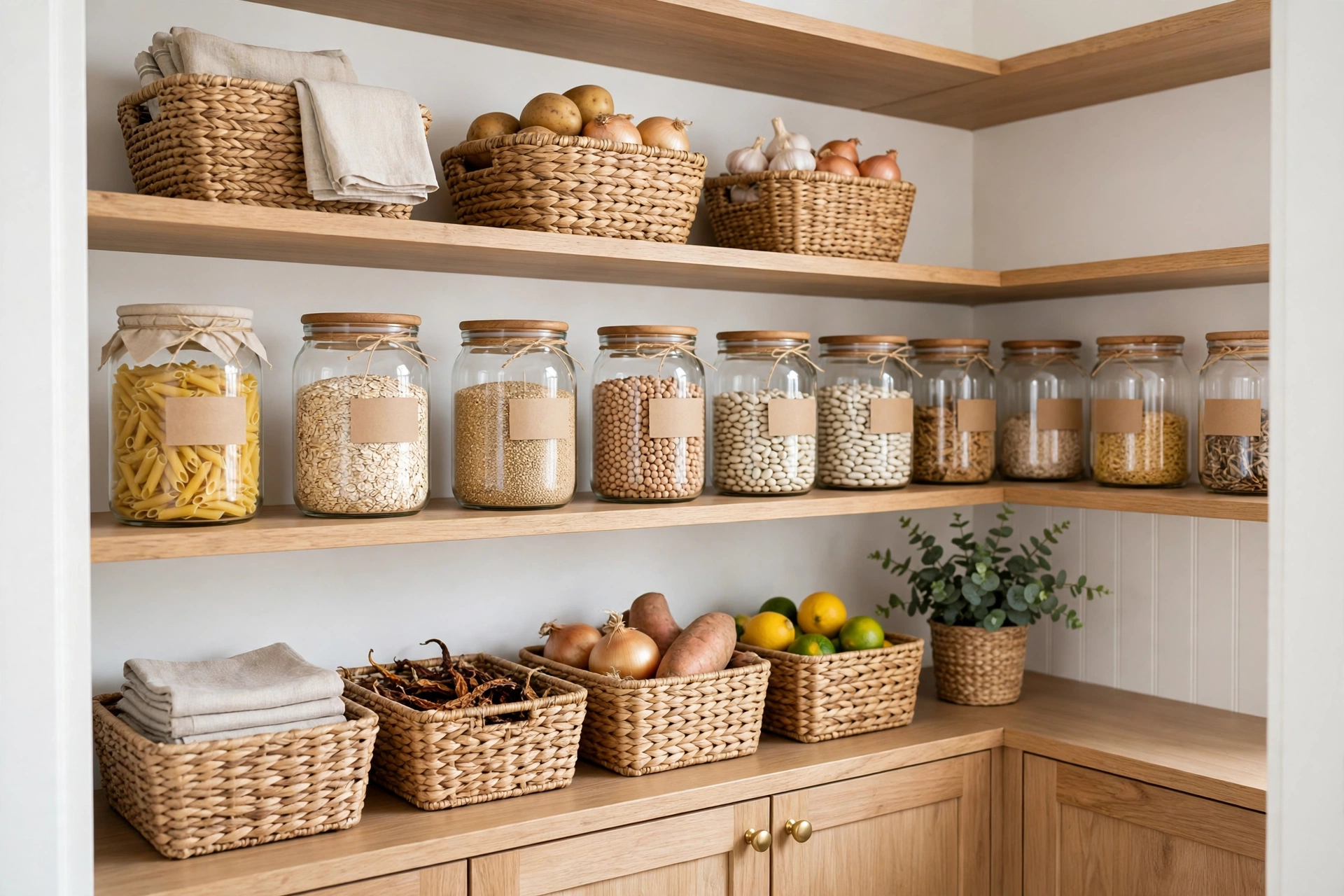
Pour flour, sugar, rice, oats, and pasta into clear airtight canisters or jars. Clear containers let you see at a glance what is running low, and airtight lids keep everything fresh and protect against pantry pests. Label each canister with its contents, so nobody has to guess whether a white powder is flour or sugar.
5. Contain the small stuff in bins
Use bins to group the small, loose items that cause most of the mess. One bin for snack bars and packets, one for spice refills, one for baking extras like chocolate chips and nuts, one for packets of soup and seasoning. Clear bins are best because you can see inside, but woven baskets look warmer if your pantry is open. Keep like with like, and never let a bin become a junk drawer.
6. Add a turntable and tiered storage
Set a lazy Susan turntable on the shelf where oils, vinegars, and sauces live. One spin brings the bottle you want to the front, and nothing gets lost at the back. For canned goods, use a tiered shelf riser or stack cans in a single row with labels facing out — a second row behind the first is where cans go to be forgotten.
7. Label everything and keep an inventory
Label every bin, canister, and shelf zone. Labels are what keep the system working after the first week, because everyone in the house can put things back in the right place. Keep a simple inventory list on the pantry door or your phone, and add items to the shopping list as they run low. Then step back and enjoy the view: a pantry where everything is visible, reachable, and in its place.
Keeping It Organized for Good
The secret to a pantry that stays organized is a five-minute weekly reset. Once a week — the night before grocery shopping works well — open the pantry, pull anything expired to the front, straighten the bins, and check the inventory list. Small habits, repeated weekly, are what keep the system alive.
Small Pantries and Shared Kitchens
A small pantry can work just as well as a large one — it simply needs stricter zones and fewer duplicates. Use the inside of the pantry door for spices, hooks, or a narrow rack. Stack bins to use the full height of each shelf, and keep a step stool nearby so the top shelf is genuinely usable. In a shared kitchen, labels matter even more — they are the agreement about where things live.
Safety Notes
Keep heavy items like large bags of flour, rice, and canned goods on low shelves, where they are stable and easy to lift without straining your back. Use a sturdy step stool — never a chair — to reach high shelves, and place it on a flat, steady surface with someone nearby if you need to climb. Check that shelves are firmly fixed before loading them with heavy canisters, and do not overload a shelf past what it can hold. Keep cleaning products completely separate from food, ideally in a different cupboard, and never store them above food. Store sharp items like scissors and knives out of reach of small children.
Frequently Asked Questions
How do I start organizing a messy pantry?
Start by taking everything out. It sounds like more work, but it is the fastest way to see what you actually have, toss what is expired, and plan zones that fit your space. Sort everything into groups on the table, wipe the shelves, then put things back by zone with bins and labels.
What containers work best for pantry organization?
Clear, airtight canisters are best for dry goods like flour, sugar, rice, and pasta, because you can see the contents and the level at a glance. Clear bins work best for grouping small items like snack packets and spice refills. A lazy Susan turntable is ideal for oils and sauces, and a tiered riser keeps canned goods visible.
Should I label everything in my pantry?
Yes — labels are what keep the system working. Label every bin and canister with its contents, and label the shelf zones too, so everyone in the house knows where things belong. A label maker gives the neatest result, but chalk labels or masking tape and a marker work just as well. Re-label whenever a zone changes, so the labels always tell the truth.
How do I keep my pantry organized long term?
Build in a five-minute weekly reset: check dates, straighten bins, and update the shopping list before grocery day. Always put new groceries behind older ones so the older stock gets used first, and put things away by zone the moment they come home. If a bin starts to collect random items, empty it and re-sort it right away — small messes are easy to fix, and big ones are what overwhelm you.
What should I do with food I no longer want?
Unopened, in-date food can go to a local food bank or a community pantry. Opened dry goods that are still fresh can go to a neighbor or a friend who will use them. Anything expired, stale, or open for a very long time should go in the trash or compost, depending on your local rules. Letting go of food you will not use is part of the process, not a waste.
A pantry where you can see everything, reach everything, and find everything — that is a small daily calm that makes cooking feel easier, every single day.